European nurseries · Root balling
Root Ball Wire Baskets for Tree Transplanting
Woven diamond-mesh baskets for nurseries. The nursery uses its own cloth and its own closing tool. This workshop sells the basket.
Also known as: Ballierkorb / Drahtkorb, draadkorf / boomkorf, kosz druciany, paniers métalliques pour mottes.
This is a root ball wire basket for lifting trees: soft wire woven into a diamond mesh, closed around the soil ball. It is not a household basket, and it is not the galvanized welded cone used with many North American tree spades. The size range discussed for this factory is about 35–245 cm. A nursery wraps the ball in its own cloth, sets the basket around it, and closes the edge wire with its own tool. Huachu quotes nurseries and distributors in the Netherlands, Belgium, Germany, Austria, Poland and the United Kingdom. Pallet and container quantities are confirmed on the enquiry, not guessed here.
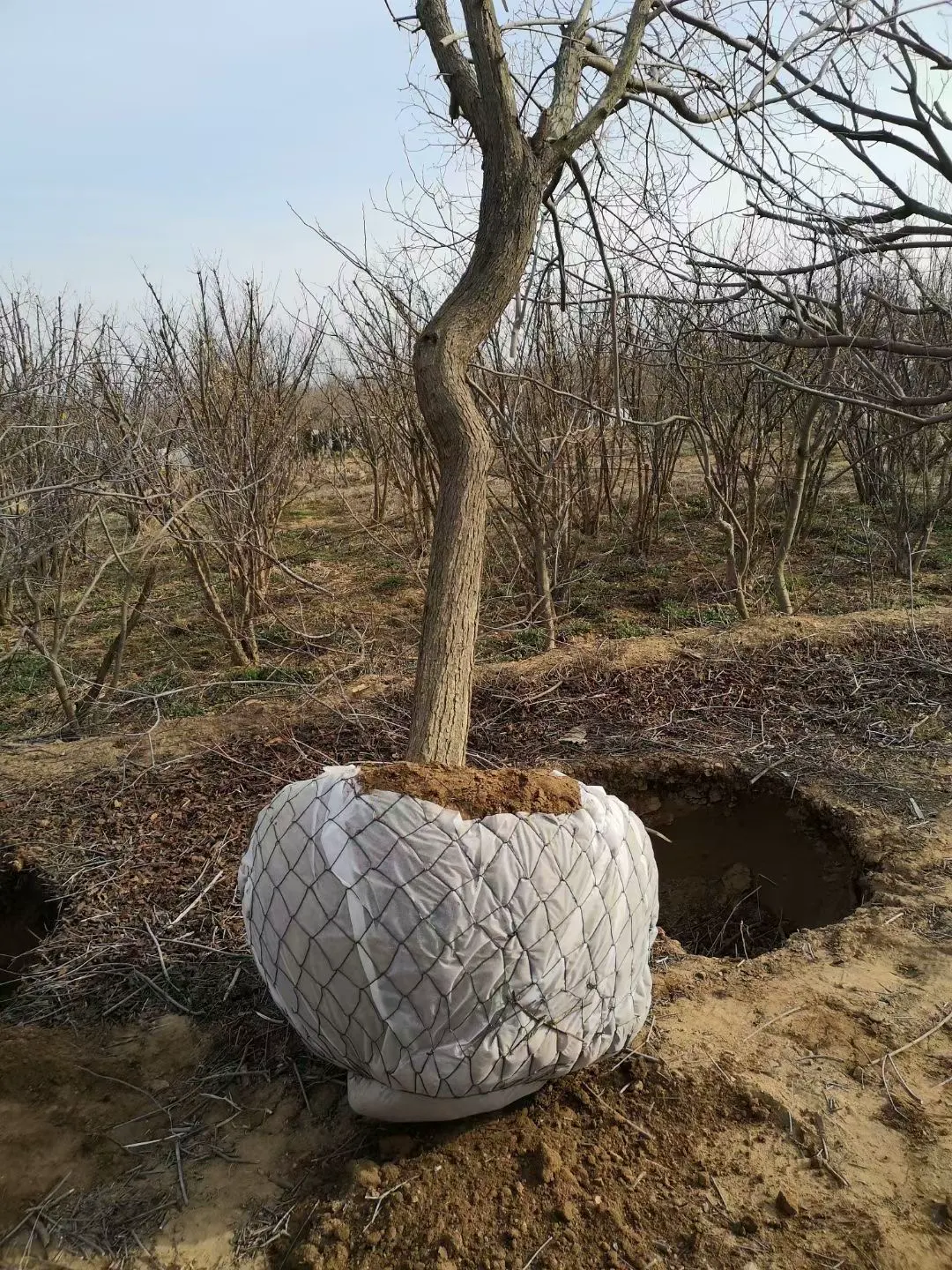
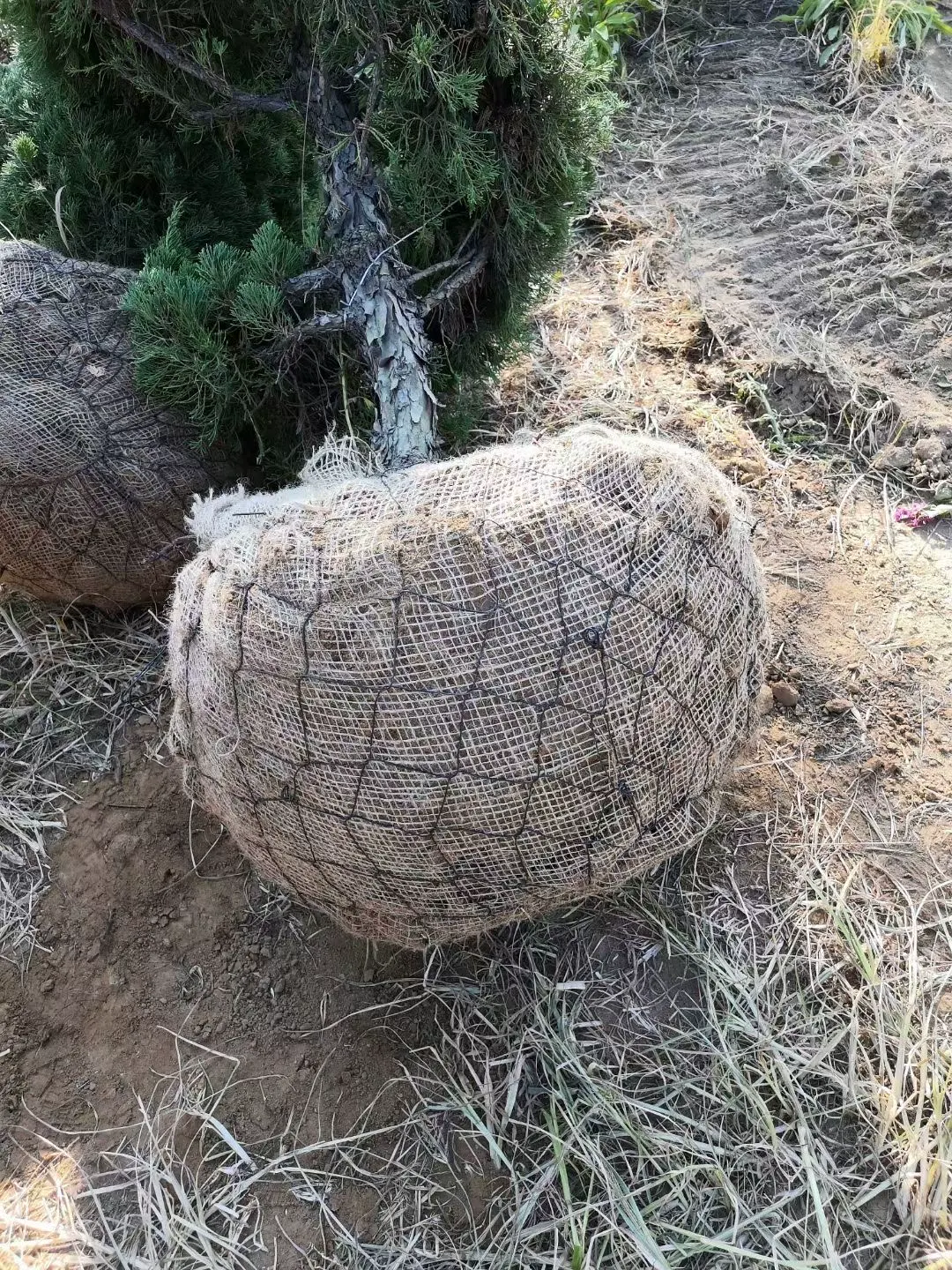
Baskets around root balls
The wire basket is what this workshop sells. The cloth in these pictures belongs to the nursery.
Why nurseries use a root ball wire basket
A woven basket keeps the root ball together while the tree is loaded, stacked and moved again. Cloth alone is often not enough once the plant is large. The wire stops the ball collapsing and limits the tearing of roots that comes with a loose ball.
For the European style, buyers ask for non-galvanized wire, mostly 2 mm or thinner, so the basket can rust in the soil and roots can grow out through the diamond mesh. That is the usual nursery specification. It is not a promise that this factory’s wire disappears on a set date. Wire diameter is customizable. Typical published wire is about 0.8–2.0 mm.
The same English search sometimes returns galvanized tree-spade baskets sold by the inch. Those are a different article. They are linked further down, off this H1.
Basket types we supply
Woven diamond-mesh baskets (European root-balling)
Annealed wire is woven into a diamond mesh, with an edge wire that draws the mouth shut. Buyers also call this a rootball basket, a tree rootball basket, or a nursery wire basket. Two profiles are named in Europe. Say which one you mean: the same top diameter can be flat or deep.
Flat / Holland type
The shallower basket. Exporters and European catalogues often associate this shape with Holmac and Pazzaglia root-balling work. That is how the type is discussed. It is not an approval from those machine makers. A fit for a named machine is on request. Height is customizable.
Deep / France–Belgium type
More depth, for a deeper ball. French buyers sometimes say profond. Some deep baskets are discussed next to Damcon spades. That is industry language, not a machine approval. Height is customizable.
A rounded typ NL basket, easier to draw up under the ball, and a typ DE basket are names used in parts of Central and Eastern Europe. Ask if you need one of those names; other profiles are on request. The baskets on this page are woven to a size on the stations, not sold as a flat sheet of mesh.
Conical welded wire baskets (tree-spade style)
A welded cone, or a truncated cone, is a separate product. Top and bottom are often quoted in inches, the mesh is welded, and the finish is frequently galvanized. European buyers who want a diamond-mesh rootball basket should stay with the types above. If you also need cones, use the other page and keep the lines apart on the enquiry.
Product quality / close-up
This clip is a finished flat diamond-mesh root ball basket on a tarp. A hand follows the centre ring and the twisted outer edge. It does not show the workshop. The filming date is not on the file. Wire diameter is customizable, and the typical mesh and wire ranges are in the table below.
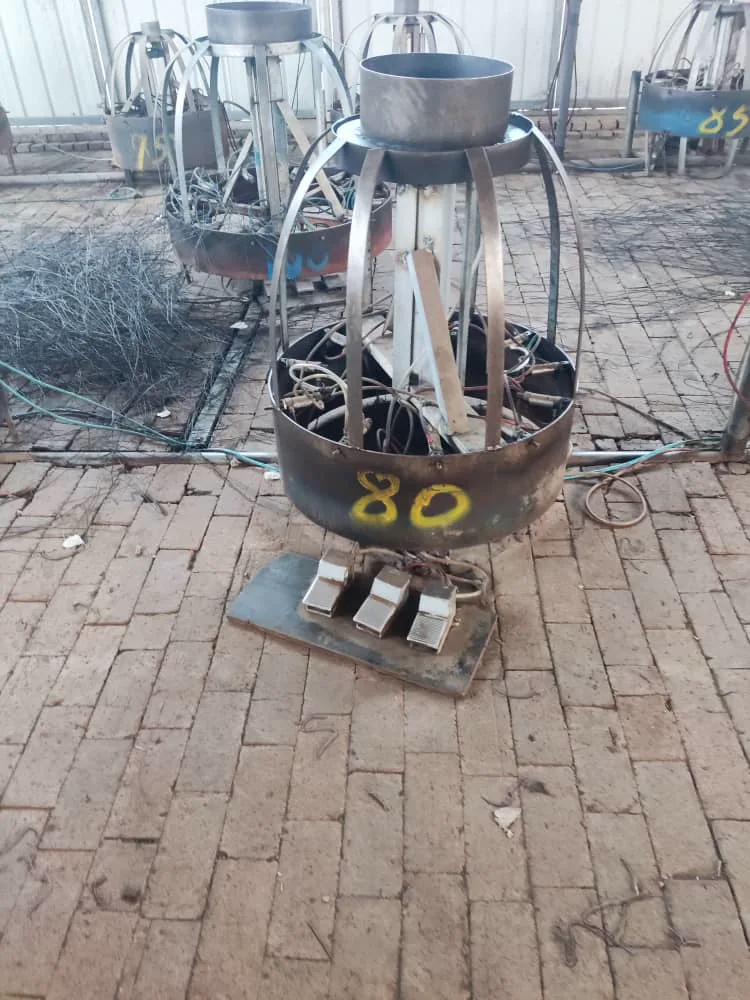
The stations in the workshop photograph are each set up for one basket size. The number painted on the frame is that top diameter in centimetres.
Sizes and specifications
European orders use the top diameter in centimetres. A German buyer may say Größe. A Dutch buyer may say SAW, or a boomkorf number. Those codes are not the same from one catalogue to the next, so this page sells by centimetres. A number painted on a weaving station is that diameter. No other supplier’s number chart is reprinted here.
Scroll sideways to read every column.
| Item | Type | Top diameter (cm) | Height | Mesh | Wire diameter | Edge / draw wire | Material | Surface | Colour flag | Pcs / bundle |
|---|---|---|---|---|---|---|---|---|---|---|
| On request | Flat / Holland | Commonly about 35–245 | Customizable. This is the shallower profile. | Commonly about 3.5–10 cm, often wider on larger diameters | Customizable. Commonly about 0.8–2.0 mm | Customizable. Commonly a little heavier than the mesh wire, about 1.2–2.0 mm | Steel wire. Grade on request. | Typically ungalvanized | On request | On request |
| On request | Deep / France–Belgium | Commonly about 35–245 | Customizable. This is the deeper profile. | Commonly about 3.5–10 cm, often wider on larger diameters | Customizable. Commonly about 0.8–2.0 mm | Customizable. Commonly a little heavier than the mesh wire, about 1.2–2.0 mm | Steel wire. Grade on request. | Typically ungalvanized | On request | On request |
- Typical sizes, custom sizes available. The figures are the ranges reputable catalogues publish for this style of basket. They are not a Huachu measured certificate, and they are not another maker’s size-by-size chart.
- European nursery orders for this style are usually non-galvanized, with wire mostly 2 mm or thinner. A number painted on a weaving station is that top diameter in centimetres. Station 80 is an 80 cm basket.
- Minimum order is 500 pieces. Stock is available. Lead time, pieces per bundle, pallet quantity and tolerances are on request. This factory does not sell lining cloth or closing tools.
- Buyers sometimes quote a German Größe number or a Dutch SAW or boomkorf number. Those codes are not the same from one supplier to another. Orders are confirmed in centimetres. Another supplier’s chart is not printed here.
Amber text is a blank, not a measurement. Do not copy it onto a purchase order.
How to choose a diameter
Measure the root ball. Pick the basket that will hold that ball, slightly close, and stop at the top of the ball without touching the trunk. Do not order from tree height alone. Published nursery descriptions relate stem size to a minimum ball; use the buyer’s own standard for that comparison. Typical catalogues name about 35–245 cm. Custom sizes are available.
Mesh size and wire diameter
On this kind of basket the mesh opening and the wire often step up as the diameter grows. The opening has to let roots through and still hold the ball after the edge wire is drawn tight. Wire for the European style is mostly 2 mm or thinner, and the diameter is customizable. The table above is labelled typical sizes, custom sizes available. It is not a test certificate.
Materials and European nursery practice
The wire buyers expect is black annealed steel, not a galvanized coating. The steel grade is on request. A light oil film is common in the trade so baskets do not rust shut in storage and the wires do not stick while they are tightened. Whether this workshop oils the wire, and with which oil, is on request.
Dutch quality descriptions for plants delivered in a draadkorf say the basket should not be galvanized, and that the wire is generally no thicker than 2 mm. German planting notes usually leave a non-galvanized Drahtkorb in the ground and cut the top Spanndraht. Treat that as common practice and a public quality description, not as a certificate held by Huachu. The usual finish is ungalvanized. Another finish is on request, and it is named on the order so it is not shipped on a non-galvanized nursery specification.
Colour flags that mark the diameter are a habit in European wholesale. A flag chart is on request. The nursery wraps and closes the ball with materials it already has. This factory sells the wire basket only.
How nurseries use the basket
This is the usual root-balling sequence. It is not a method certified by this factory. The workshop sells the basket only.
- Form the root ball to the nursery’s own standard.
- The nursery wraps the ball in cloth it already has. Do not tie that cloth on the trunk.
- Set the ball into the basket, or draw a pre-shaped basket up around it. The wire reaches the top of the ball and does not touch the trunk.
- The nursery closes the draw wire with its own tool.
- Keep the ball moist while it is stored and while it travels.
- At planting, common European practice is to leave the non-galvanized woven basket in the soil, cut the top Spanndraht, and fold the upper cloth back. Advice about cutting away the top third of a galvanized welded cone belongs to that other basket. Do not move it across until you know which basket is in the hole. A planting note from this factory is on request.
Packing, lead time and export
The minimum order is 500 pieces. Stock is available. Lead time is on request. Pieces in a bundle, baskets on a pallet, samples, shipping terms and the port of loading are on request.
The page is written for the Netherlands, Belgium, Germany, Austria, Poland and the United Kingdom. It does not claim CE marking, an FLL certificate, or any other approval. The baskets are described against common European nursery practice. Documents that can travel with a shipment are on request.

Frequently asked questions
Do I have to remove the wire basket when planting the tree?
DE: Muss der Drahtkorb bei der Pflanzung entfernt werden? NL: Moet de draadkorf bij het planten verwijderd worden?
Common European nursery practice is to leave a non-galvanized woven basket in the soil, cut only the top tightening wire (Spanndraht), and fold the upper cloth back so it does not choke the trunk. That advice assumes wire that can rust and a mesh the roots can grow through. It is public planting practice, not a certificate from this factory, and it is not a promise of how fast the wire disappears. Guidance written for galvanized welded cones often says to cut away the upper part of the basket. Do not copy that rule onto this woven basket until you know which basket you have. A planting note from this factory is on request.
Are the baskets galvanized? Will the wire rust in the soil?
DE: Sind die Körbe verzinkt? NL: Zijn de korven gegalvaniseerd?
Baskets for this European nursery style are typically ungalvanized, so the wire can rust and roots can leave the mesh. Dutch quality descriptions say draadkorven should not be galvanized and that the wire is generally no thicker than 2 mm. Rust speed depends on soil, moisture and wire size. This page does not promise a date by which the wire is gone. Wire diameter is customizable. Another finish, if it is ever made, is named on the order so it is not shipped against a non-galvanized nursery specification.
Which diameter do I need for my trees?
DE: Welche Größe / welcher Durchmesser? NL: Welke diameter of SAW-maat?
Measure the root ball and order the centimetre diameter that will close around it, clear of the trunk. Tree height alone is a poor guide. If the enquiry uses a German Größe number or a Dutch SAW or boomkorf number, convert it to centimetres first: those codes differ between suppliers. Typical catalogues run from about 35 cm to about 245 cm, and custom sizes are available. A number painted on a weaving station is that diameter in centimetres. Item numbers are on request.
What is the difference between Holland/flat and France–Belgium/deep baskets?
DE: Flacher oder tiefer Korb? NL: Platte of diepe korf?
Holland or flat baskets are the shallower profile. France–Belgium or deep baskets have more height for a deeper ball. They are two shapes for root balling, not two quality grades. Basket height is customizable. Other regional names, such as a rounded typ NL basket, are on request. Choosing the wrong depth leaves the ball loose or wastes wire.
Are the baskets compatible with Holmac, Pazzaglia or Damcon machines?
DE / NL: buyers ask the same question using the machine name.
Send the machine and the ball depth. Buyers often mention Holmac or Pazzaglia with a flat basket, and some deeper work with Damcon. That is industry language. It is not an approval from those manufacturers, and this factory has not published a tested fit. A fit for a named machine is on request.
What mesh size and wire thickness do you use?
DE: Maschenweite und Drahtdurchmesser? NL: Maaswijdte en draaddikte?
Mesh and wire usually change as the diameter increases. Wire that is too heavy can sit outside some European nursery descriptions; wire that is too light can fail on a large ball. The mesh also has to let roots through and still hold the ball after it is tightened. Wire diameter is customizable, commonly about 0.8–2.0 mm, and mostly 2 mm or thinner for this style. Mesh is commonly about 3.5–10 cm. Those are typical published ranges, not a Huachu test report. The table is on this page.
Do you sell lining cloth or closing tools with the basket?
DE: Verkaufen Sie Tuch oder Werkzeug? NL: Levert u doek of gereedschap?
No. The product is the wire basket. The nursery uses cloth and a closing tool it already owns. This factory does not make those items and does not list them for sale.
Can the basket be ordered on its own?
DE: Kann der Korb allein bestellt werden? NL: Kan de korf los besteld worden?
Yes. Send the profile, the diameters and the quantities. Nothing else from a root-balling kit is part of the order.
What are MOQ, packing and lead time for export to the EU and UK?
DE: Mindestmenge, Verpackung, Lieferzeit? NL: MOQ, verpakking, levertijd?
The minimum order for root ball baskets is 500 pieces. Stock is available. Lead time, pieces per bundle, pallet quantity, samples and shipping documents are on request. Nothing on this page is a price.
Can you do custom sizes, private label or our colour flags?
DE: Sondermaße / Privates Label? NL: Maatwerk of eigen label?
Custom diameters are available. Height and wire diameter are customizable. A private label or colour flags that match a code you already use are on request. The minimum order for root ball baskets is 500 pieces.
Request a quote / technical enquiry
Send company, country, the profile (flat or deep), diameters in centimetres and quantities, the destination, and the machine if root balling is mechanised. Millimetre and centimetre figures are confirmed on the reply. No certificate mark is shown here until a document exists, and there is no public stock figure.